History
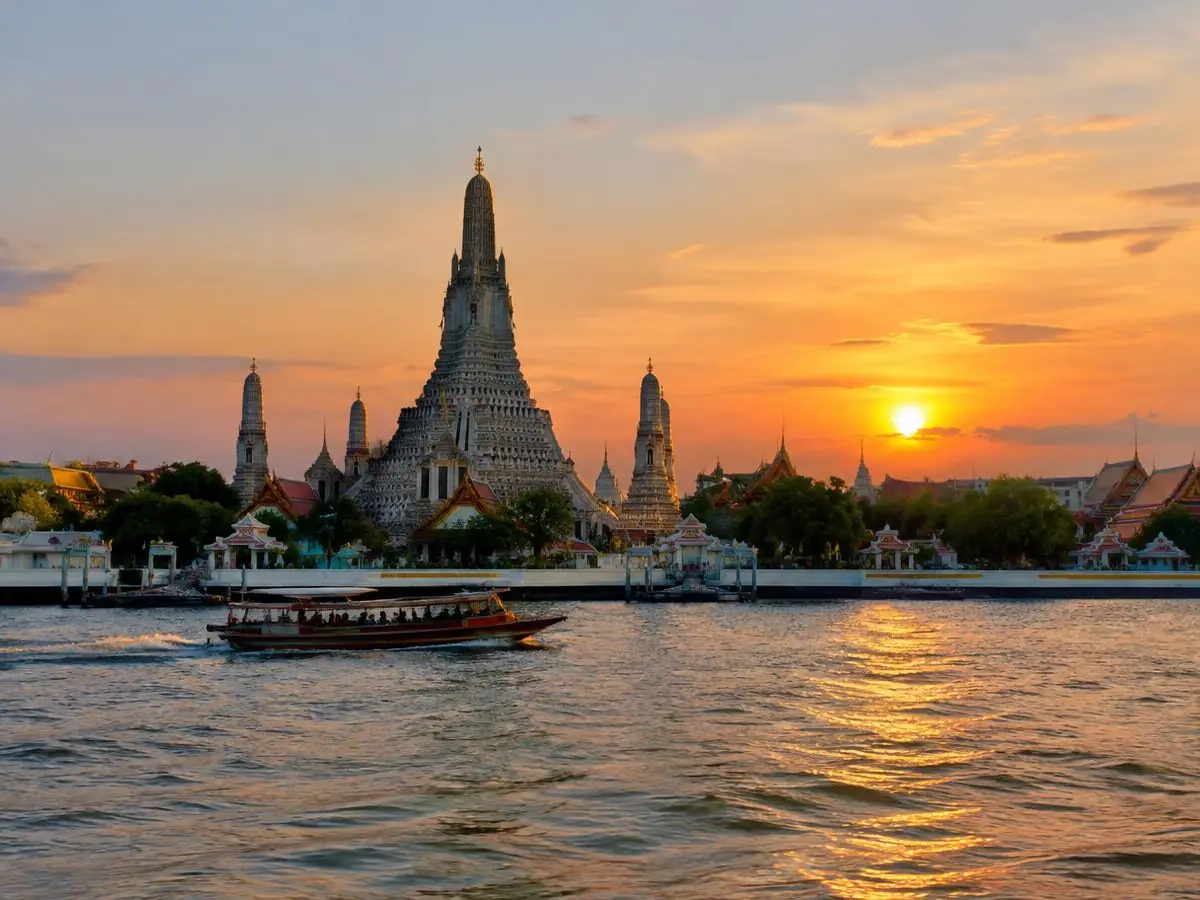
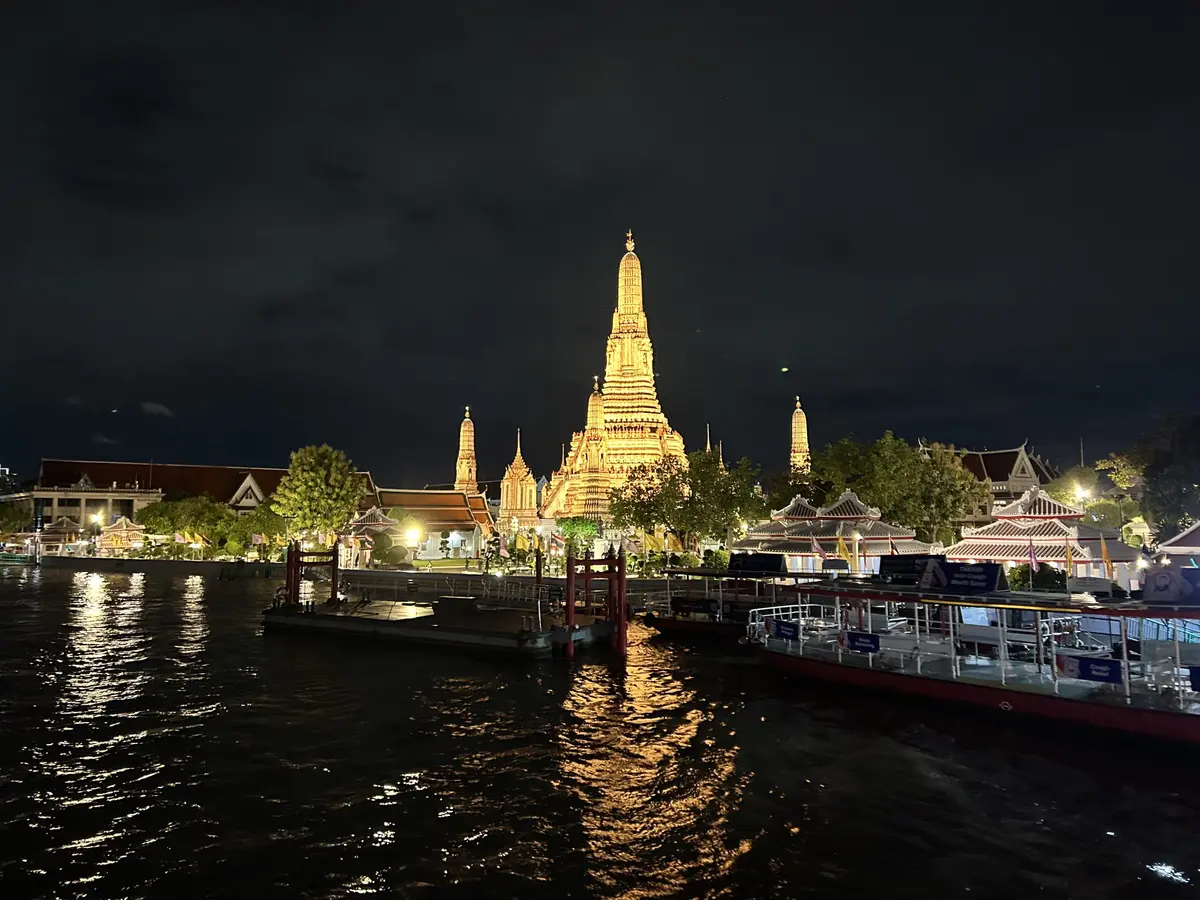
The temple is named after Aruna, the Indian god of dawn. When King Taksin sailed down the river in 1767 after the fall of Ayutthaya, he arrived here at sunrise. Wat Arun briefly served as the royal temple and for a time housed the Emerald Buddha before it moved to the Grand Palace. The tall central prang took on its present form in the 19th century under Kings Rama II and III.
What you'll see
The central prang. Porcelain and shells form flowers and figures. You can climb part of the steep stairs for views over the river.
The four smaller prangs. Standing at the corners of the grounds.
The guardians. Chinese stone statues and giants at the entrance to the ordination hall.
The view. Across the Chao Phraya towards Wat Pho and the Grand Palace.
Insider tips
- The stairs are very steep: hold the rail and wear sturdy shoes.
- Early in the morning it's almost empty and the light is soft.